Choosing the right elastomer for industrial rollers is not always straightforward.
A poorly specified roller covering does not fail overnight. It drifts.
Process consistency degrades, surface defects appear and wear accelerates. When these deviations become visible, the root cause is not always easy to identify. In many cases, the covering material is not questioned first. Yet this is often where process stability is actually determined.
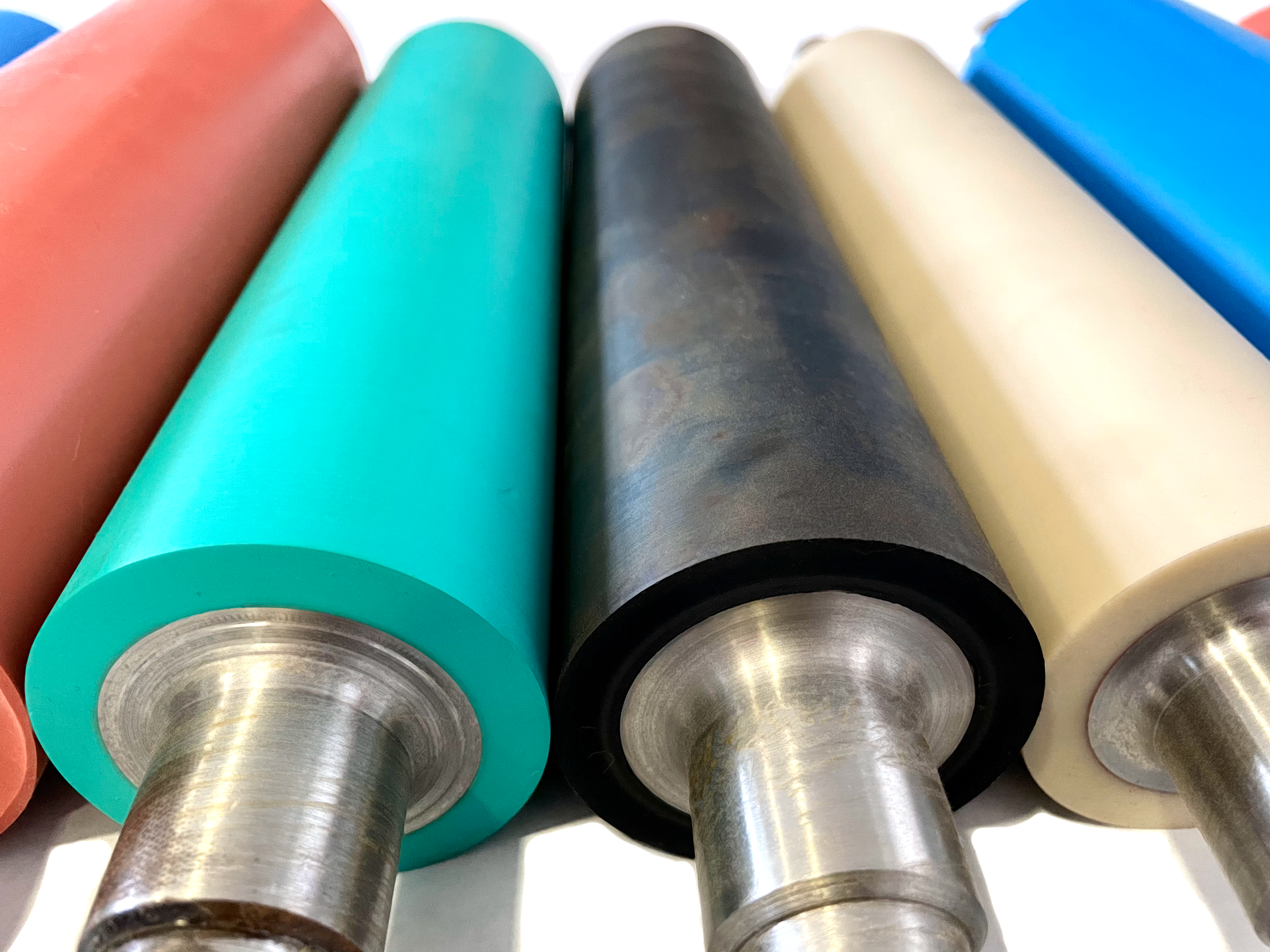
Silicone, polyurethane and rubber are not interchangeable. Their behaviour depends directly on real operating conditions: temperature, load, abrasion, chemical environment and precision requirements.
There is no universal material. The right choice is always a balance between these constraints and how they evolve over time. This guide presents a structured approach to support that decision.
Why Material Selection Is Critical for Industrial Rollers
In many industrial processes, the roller is a discreet but critical component. It plays a role in key stages such as drive, guiding, pressure, transfer or material transformation.
Its behavior directly impacts process stability, product quality and operational consistency.
In this context, the covering material plays a central role. An unsuitable choice can lead, often progressively, to deformation under load, loss of precision, surface defects, premature wear or process drift that is difficult to diagnose.
These issues usually appear over time, making their root cause more complex to identify.
Conversely, a properly selected material helps stabilize performance and reduce process variability.
Material selection must therefore always be considered in relation to real operating conditions.
Key Constraints to Consider
Before comparing materials, it is essential to analyze operating conditions. In most cases, several constraints interact.
| Constraint | Key Parameters | Points of Attention |
| Temperature | Continuous operation, peak temperatures, exposure time | A material may withstand short peaks but fail under continuous exposure. Direct impact on elasticity and aging. |
| Mechanical stress | Load, pressure, speed, repeated cycles | Influences deformation, long-term behavior and fatigue resistance. |
| Abrasion and wear | Material handled, friction conditions, usage frequency | Elastomers do not offer the same level of wear resistance. |
| Chemical environment | Solvents, oils, cleaning agents, humidity | Compatibility depends on temperature, concentration and exposure duration. |
| Surface contact behavior | Adhesion, release properties, uniformity, pressure distribution | Critical in converting processes and sensitive product handling. |
| Long-term stability | Aging, property evolution, dimensional stability | A material may perform initially but degrade over time. |
Silicone, Polyurethane, Rubber: Understanding the Differences
Comparing materials is not about identifying a “best” elastomer. The objective is to understand where each material is relevant, and where its limits appear.
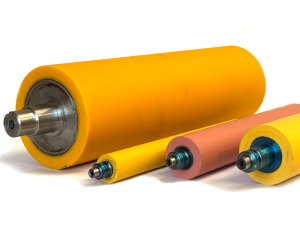
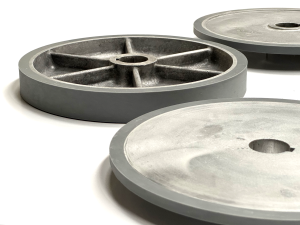
SILICONE
Silicone is used when thermal stability and surface behavior are critical.
Depending on formulation, silicone rollers can operate continuously up to 250°C, with peaks approaching 280 to 300°C under controlled conditions.
It also offers good long-term stability and consistent surface behavior, particularly in applications involving sensitive materials.
In some cases, formulations compatible with food-contact requirements (FDA 21 CFR, EU Regulation 1935/2004) can be used.
Strengths: excellent thermal resistance, long-term stability, flexibility, controlled surface behavior.
Limitations: lower abrasion resistance, limited mechanical strength under high load.
Silicone: most relevant when temperature or product contact takes priority over mechanical resistance.
For a deeper look at the properties and industrial applications of silicone, read our dedicated article: All about silicone: from its unique properties to its industrial use
POLYURETHANE
Polyurethane is preferred for applications involving high mechanical stress and wear.
Depending on formulation, it offers significantly higher abrasion resistance than many standard rubbers, along with good load-bearing capacity and dynamic performance suited for intensive use.
It is generally used in moderate temperature environments, typically up to around 70–80°C in continuous operation, depending on conditions.
Strengths: excellent wear resistance, strong mechanical performance, high durability.
Limitations: lower thermal resistance than silicone, performance highly dependent on formulation and operating conditions.
Polyurethane: most relevant for conveying, handling and high-load applications.
For a deeper look at the properties and industrial applications of polyurethane, read our dedicated article: Polyurethane: everything you need to know about this material
RUBBER
Rubber includes a wide range of compounds with varying properties.
Depending on the formulation, it can provide targeted chemical compatibility, specific surface behavior (e.g. printing, solvent contact) and strong adaptability to certain processes.
Strengths: versatility, targeted compatibility, suitability for specific processes.
Limitations: performance varies significantly depending on formulation and conditions.
Rubber: most relevant when the process requires specific chemical or surface properties.
Comparative Overview of Materials
This table provides a general comparison but does not replace a full process analysis.
| Criteria | Silicone | Polyurethane | Rubber |
| Temperature | Very high (≈250–280°C) | Moderate (≈70–80°C) | Variable |
| Abrasion resistance | Low | Very high | Variable |
| Mechanical strength | Low to moderate | High | Variable |
| Flexibility | High | Moderate | Variable |
| Product contact | Very good (depending on formulation) | Variable | Specific |
| Long-term stability | Very good | Good | Variable |
Detailed Comparison of Industrial Elastomers
For a more in-depth material selection, elastomers must be evaluated across multiple criteria: temperature, mechanical resistance, abrasion, aging, chemical compatibility and in-service behavior.
The table above provides a decision-support overview to guide material selection based on the main process constraints.
Need a technical solution?
Trust ENRI for your industrial coatings and molded technical parts.
Contact our experts →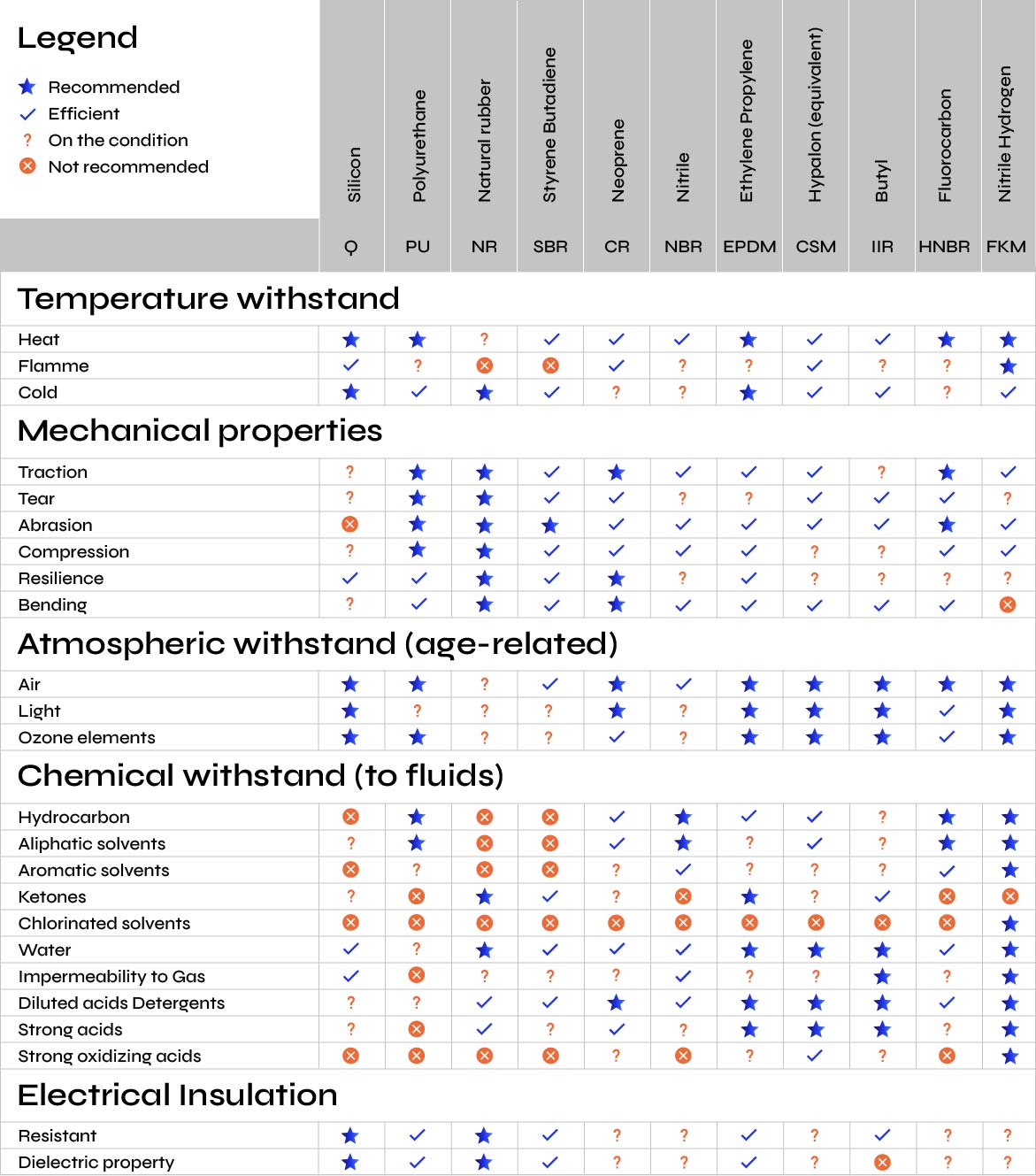
It offers a general comparison, but final selection always depends on the combination of constraints rather than a single parameter.
Industrial Perspective: A Practical Example
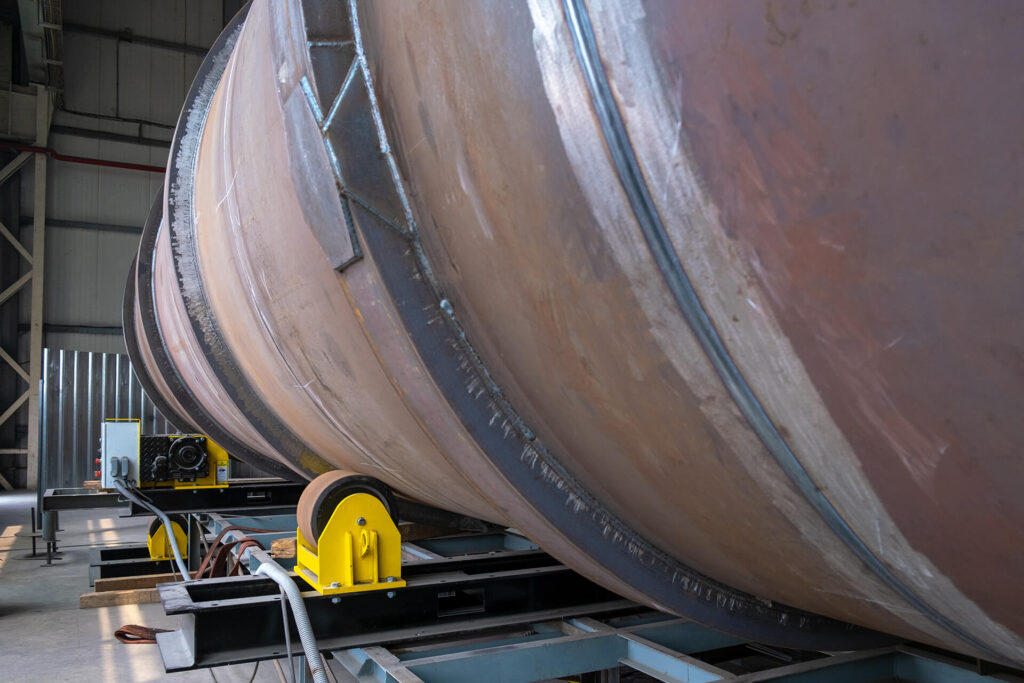
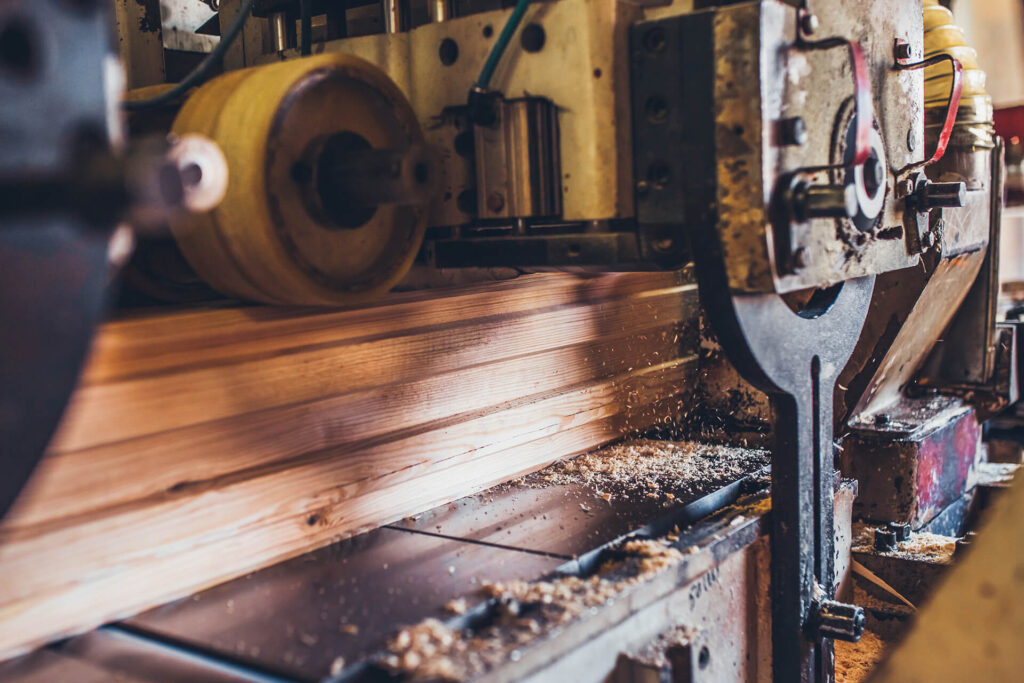
In a conveying line exposed to high loads and continuous abrasion, silicone, despite its thermal stability, will quickly reach its mechanical limits.
In contrast, polyurethane will maintain performance over time by limiting wear and deformation under load.
In a high-temperature process involving sensitive product contact, the logic reverses: silicone becomes the more suitable option, while polyurethane may lose performance.
This illustrates a key industrial reality: performance is not inherent to the material itself, but to how well it matches actual operating conditions.
Common Mistakes
Selecting a material based on a single criterion.
Underestimating long-term behavior.
Relying on habits instead of real process conditions.
Neglecting the chemical environment.
Confusing hardness with overall performance.
Material Selection Is a Trade-Off
In industrial applications, there is no perfect material. Each solution is a compromise between mechanical, thermal, chemical and functional constraints.
A material that performs well in one context may become a source of process instability in another.
Material selection must therefore always be directly linked to real operating conditions.
ENRI’s Approach
At ENRI, elastomer selection is not based on standard or default material choices.
It relies on analyzing real operating conditions to identify the most reliable balance between mechanical stress, temperature, chemical environment, contact conditions, precision requirements and long-term performance.
In practice, this analysis involves matching material properties with actual process parameters: product type, contact conditions, operating cycles, chemical exposure and mechanical loads.
This approach makes it possible to determine when silicone provides the required stability, when polyurethane is needed for wear or load resistance, and when a specific rubber compound is the most appropriate solution.
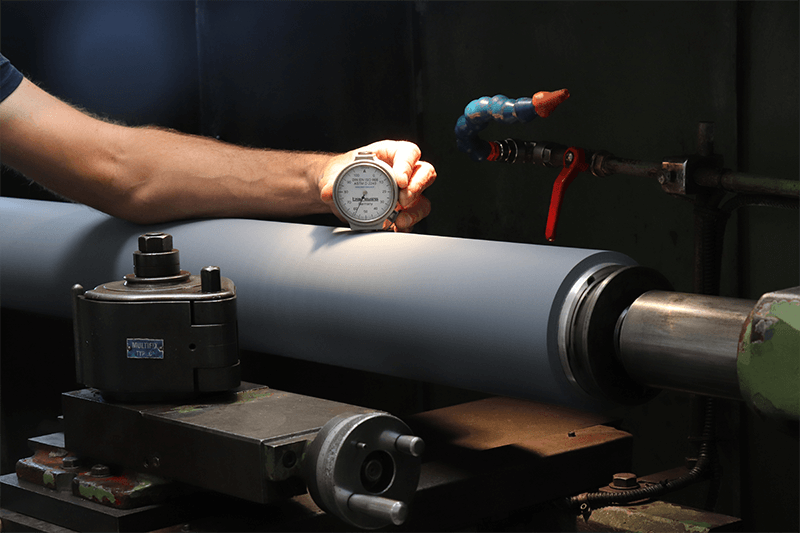
Roller performance does not depend on material alone. It also relies on overall design: quality of the metal insert, bonding of the covering, geometry, surface finish and precision grinding.
This global approach ensures consistent performance over time and reduces process deviations.
This expertise is built on over 40 years of experience in elastomer roller coverings, supporting industrial clients in France and internationally across sectors such as food processing, energy, printing, metallurgy, packaging, plastics and paper.
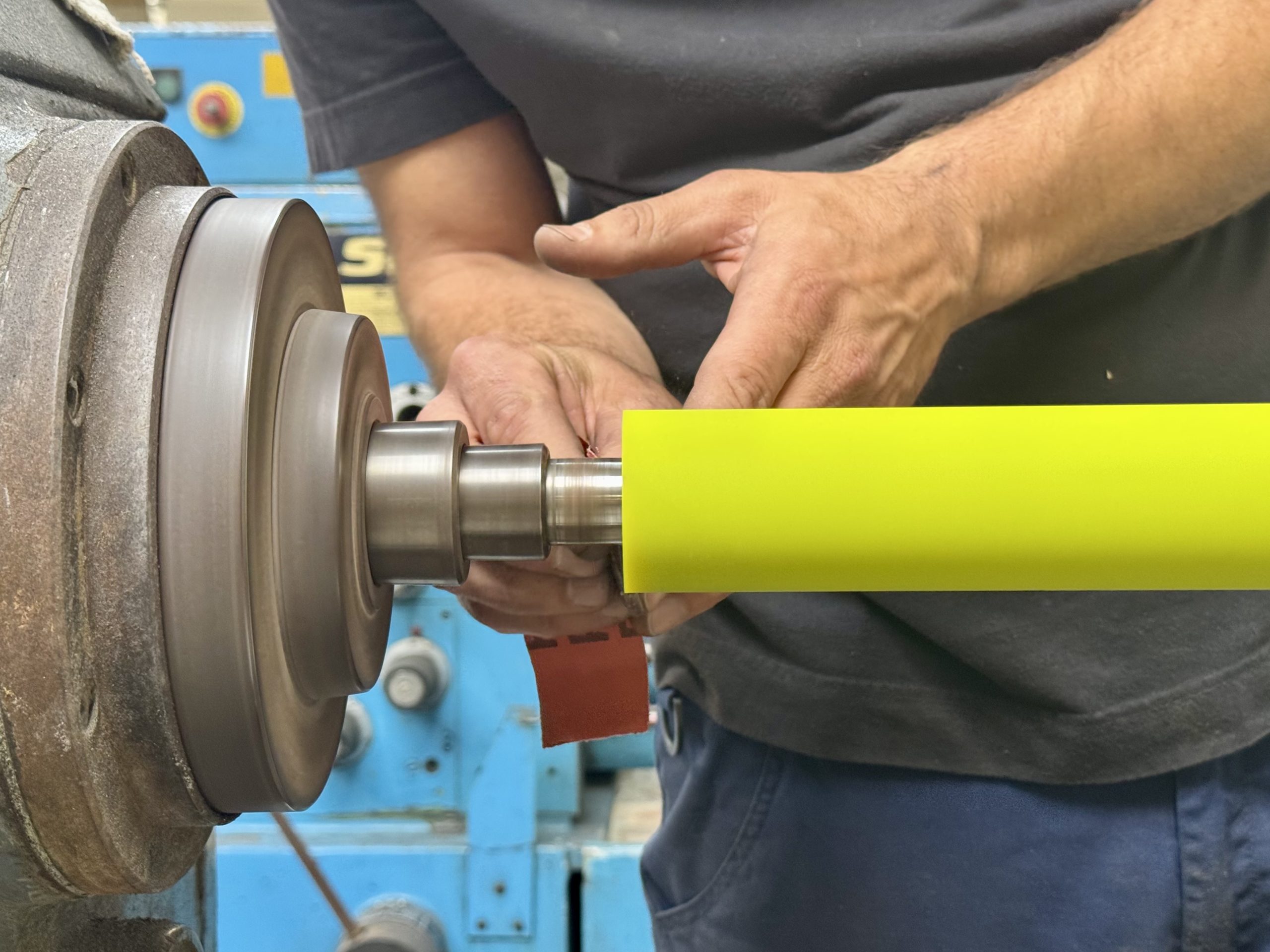
Since the integration of SACD in 2025, ENRI has strengthened its precision grinding and dimensional control capabilities on elastomer-covered rollers. Grinding operations are carried out according to the requirements of each application, with precision commonly in the order of 0.1 mm. For applications requiring a higher level of control, precision down to 0.05 mm can be studied on request.
In many cases, the issue is not the material itself, but the gap between its properties and real operating conditions.
Each application is unique. To go further, you can consult our technical catalogue or contact our team.
Contactez nos experts
Written by the ENRI technical team, 40 years of expertise in elastomer roller covering.
Frequently Asked Questions
Which elastomer should be used for food-contact rollers?
Silicone is commonly used in food-processing applications due to its surface behavior and thermal stability.
Depending on formulation, materials compatible with FDA (21 CFR) and EU Regulation 1935/2004 requirements can be used.
Final selection depends on operating conditions and contact type.
Can polyurethane withstand heat?
Polyurethane is suitable for moderate temperatures, typically up to around 70–80°C in continuous operation depending on formulation and conditions.
Beyond that, silicone or certain rubber compounds may be more appropriate.
Can an existing roller be re-covered with a different material?
Yes, in many cases. When the metal insert is preserved, the roller can be stripped, re-covered and precision ground.
This provides an alternative to manufacturing a new roller, depending on the condition of the support and application constraints.
What Shore hardness should be selected?
Hardness depends on mechanical stress, contact conditions and desired performance.
ENRI works across a wide range, from Shore A to Shore D, depending on the application.
Selection is based on the overall process, not hardness alone.
How does ENRI determine the right material?
Selection is based on real process constraints: temperature, load, chemical environment, contact conditions and precision requirements.
This approach ensures the most relevant solution for each application.
What is the most common mistake in elastomer selection?
In many cases, selection is based on a single factor such as temperature or hardness.
In reality, performance depends on the balance between multiple parameters.
A material may be suitable for one constraint but unsuitable for overall process conditions.