In many industrial processes, temperature is not just a parameter. It is often the main constraint.
Beyond 100-120°C, conventional elastomers quickly reach their limits. Rubber hardens, polyurethane starts to degrade, performance becomes unstable, and process drift appears.
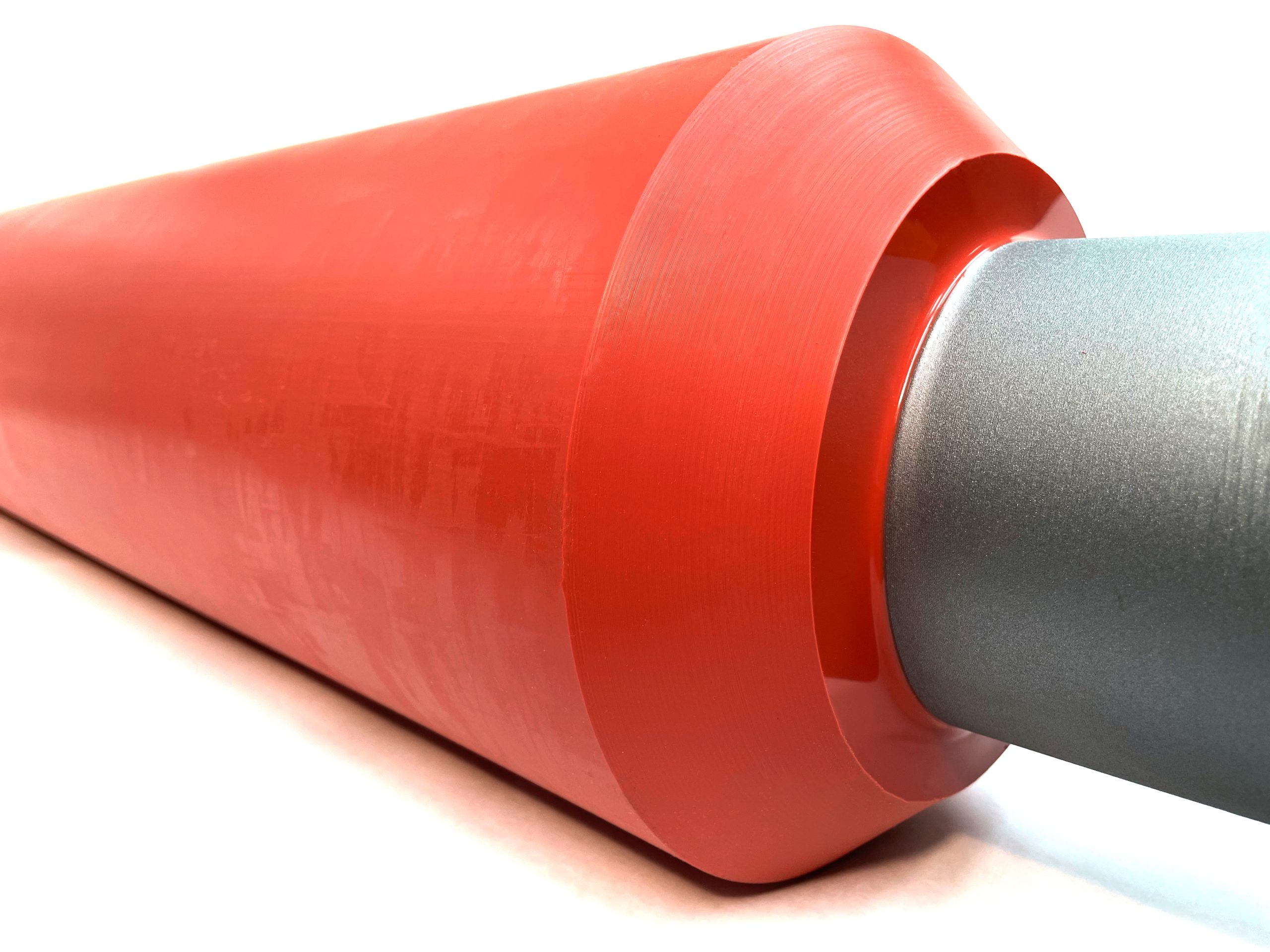
In these environments, silicone stands out as a reference solution. When used as a roller covering, it maintains both mechanical and surface properties under demanding thermal conditions.
Depending on the formulation, a silicone roller can operate continuously from -55°C up to +250°C. Higher peaks, approaching 280-300°C, are possible for short durations under controlled conditions.
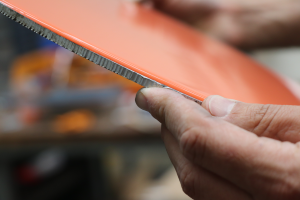
Why Silicone Performs Where Others Fail
The difference lies in its structure.
Silicone is based on silicon-oxygen (Si-O) bonds, which are inherently more stable than the carbon-carbon bonds found in conventional rubbers. This gives it excellent thermal resistance and long-term stability.
In practical terms:
- Hardness remains relatively stable with temperature
- Elasticity is maintained, even at high temperatures
- Properties remain consistent over time
Standard silicone typically performs up to around 200°C in continuous operation. High-temperature grades can reach 230-250°C continuously, with higher peaks depending on actual process conditions.
What Really Makes The Difference In Production
Beyond temperature ratings, stability is what matters.
At high temperatures:
- The roller maintains relatively stable hardness, with limited variation compared to other elastomers
- Deformation under load remains controlled
- Contact with the material stays uniform
Where conventional elastomers tend to harden and lose efficiency, silicone continues to perform consistently.
This is critical for pressure rollers and guide rollers exposed to both heat and continuous mechanical stress.
Note
Even brief temperature excursions beyond limits can cause irreversible degradation. Peak resistance must always be validated against real operating conditions.
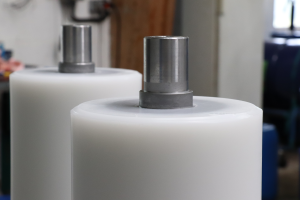
Industrial applications of high-temperature silicone rollers
Plastics Processing and Extrusion
On extrusion and calendering lines, temperatures often reach 150-250°C.
Silicone helps to:
- Reduce sticking of hot materials
- Minimize surface defects
- Stabilize the process
Lamination and Converting
In hot lamination processes, both pressure and temperature must remain uniform.
Silicone provides:
- Good conformability
- More even pressure distribution across the width
Result: more consistent bonding, without bubbles or defects.
Industrial Drying
In drying tunnels and ovens, rollers are continuously exposed to high temperatures.
Silicone maintains its properties where other materials degrade quickly, directly impacting service life and process stability.
Paper Industry
In dryer sections, silicone rollers are used in pressure against heated cylinders.
They ensure:
- Good contact with the paper web
- Efficient heat transfer
- Reduced marking
Comparison With Other High-Temperature Materials
Silicone is not the only option, but it often offers the best overall balance.
- EPDM: Effective up to 130-150°C. More mechanically resistant and cost-effective, but thermally limited
- FKM (e.g. Viton): Excellent chemical and thermal resistance up to around 200°C. More expensive and less flexible
- PTFE: Outstanding thermal resistance and non-stick properties, but used as a thin coating rather than an elastomer covering
Key Technical Parameters
Hardness
Silicone rollers are typically available from 30 to 80 Shore A.
In practice:
- 40-50 Shore A for pressure rollers
- 55-65 Shore A for general-purpose use
- 70 Shore A and above for higher mechanical loads
Surface Finish
Depending on the application:
- Smooth finish to prevent marking
- Satin finish for a balance between grip and release
- Textured finish for specific needs
A critical point: mechanical resistance
Silicone has lower abrasion and tear resistance compared to polyurethane and some rubbers.
In highly demanding environments:
- Service life may be reduced
- Adjustments are required (hardness, thickness, design)
In such cases, a broader process analysis is often necessary to determine the right material compromise.
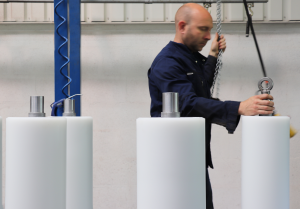
Manufacturing: a Key Factor
Roller performance does not depend on the material alone.
Bonding to the core
Silicone naturally bonds less effectively to metal than other elastomers. Surface preparation and primer selection are therefore critical, especially under thermal cycling.
Vulcanization
High-temperature grades require controlled curing conditions, often combined with post-curing to stabilize properties.
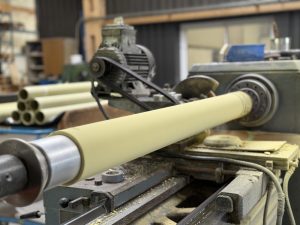
Grinding
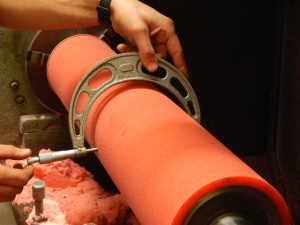
Silicone can be precision ground, provided the correct parameters are applied, ensuring consistent roller geometry and process performance.
Good to know
Proper post-curing improves thermal stability and reduces volatile compounds. This is essential for certain sensitive applications.
Common Issues And ENRI Solutions
| Problem | Cause | Solution ENRI |
| Hardening at high temperature | material thermal limit | switch to a silicone grade adapted to actual operating temperature |
| defects on film | inadequate adhesion or surface finish | adjust silicone finish (smooth or satin) |
| Coating delamination | poor silicone-to-metal bonding | optimized surface preparation and primer |
| Premature wear | excessive mechanical stress | adjust hardness or roller design |
| Process instability | property variation at high temperature | select a more thermally stable silicone grade |
Service Life And Best Practices
A properly designed silicone roller can last for several years, depending on operating conditions.
To maximize service life:
- Avoid excessive mechanical loads
- Respect operating temperature ranges
- Use compatible cleaning agents
- Regularly inspect the coating condition
Planning re-covering in advance helps prevent quality drift in production.
Summary
High-temperature silicone rollers are designed to maintain stable performance above 150°C.
Their thermal resistance, flexibility, and release properties make them widely used in plastics processing, lamination, paper, and industrial drying.
However, as in most industrial environments, performance does not rely on the material alone.
The right compound selection, roller design, and covering quality make all the difference over time.
To learn more about silicone and its unique properties, explore our in-depth article:
https://www.enri-leblanc.com/all-about-silicone-from-its-unique-properties-to-its-industrial-use/
Optimize your industrial performance
Discover how our solutions can improve the efficiency of your equipment.
Contact our experts →