Article published in 2023, updated in April 2026
Introduction
Among the technical elastomers used in industry, silicone holds a particular place. Thanks to its combination of thermal stability, resistance to ageing and specific surface properties, this material is widely used in many industrial processes.
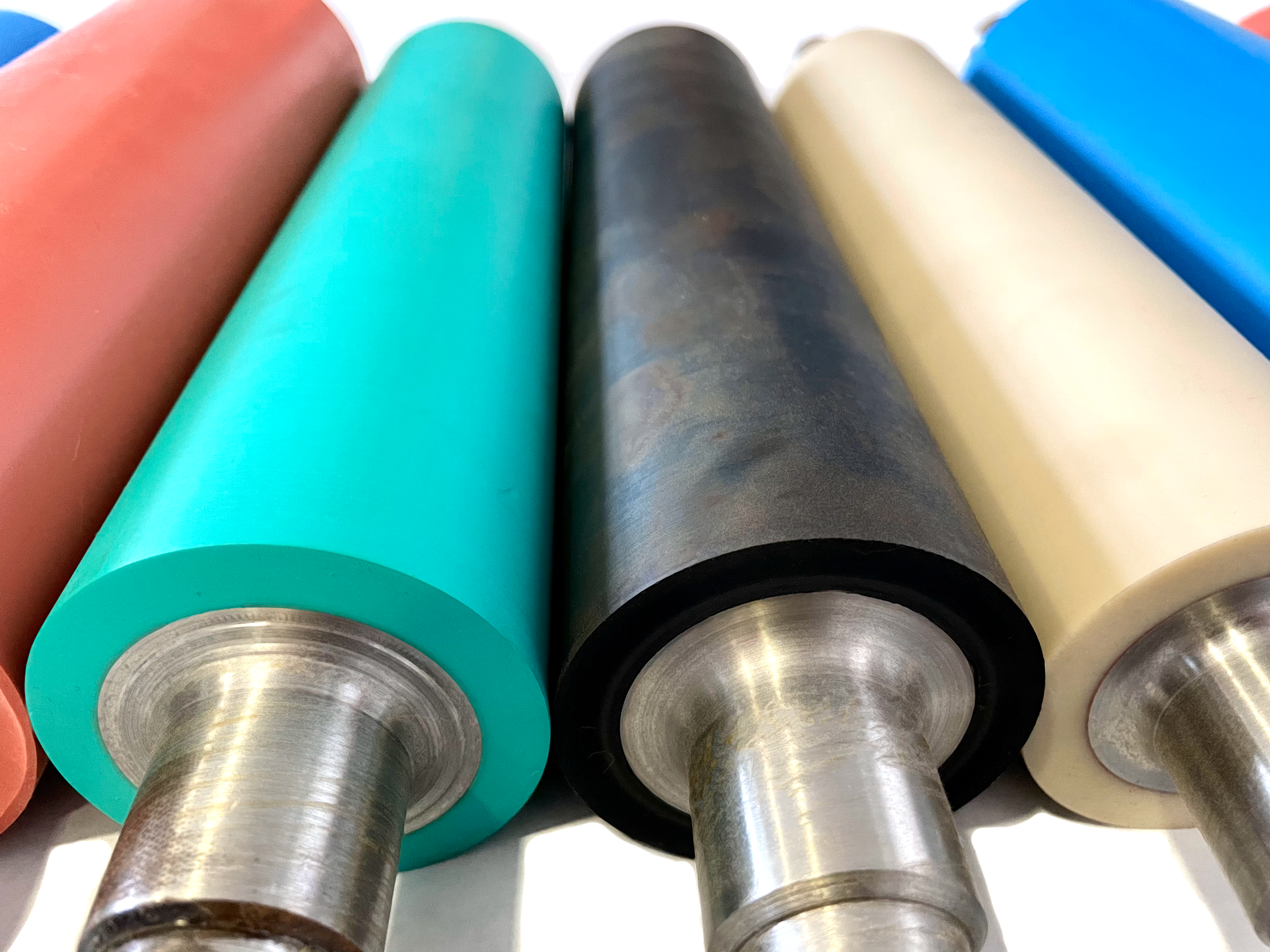
Today, silicone elastomers are found in a wide range of applications including sealing systems, moulded technical parts, insulating components and technical coatings for industrial rollers.
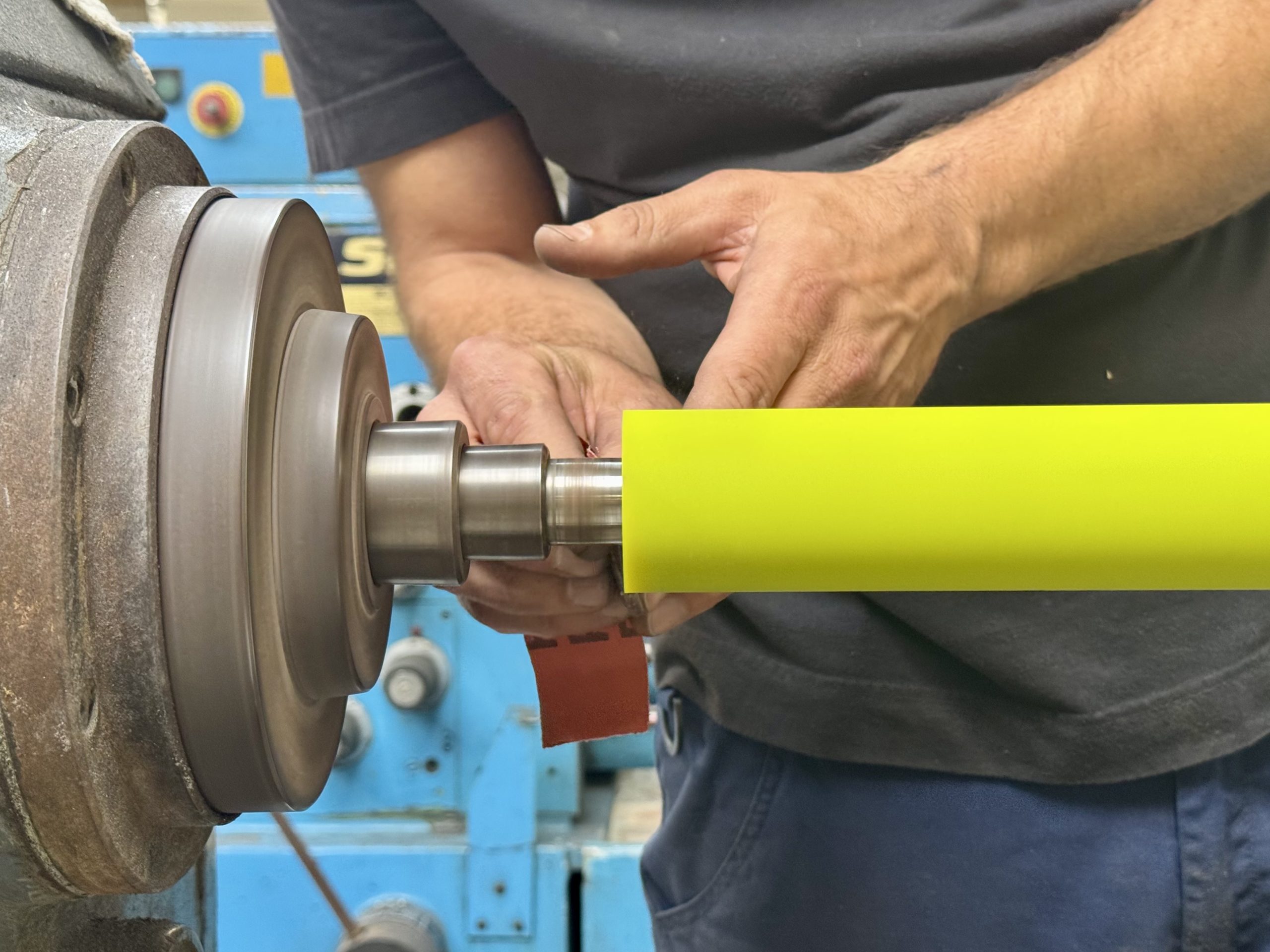
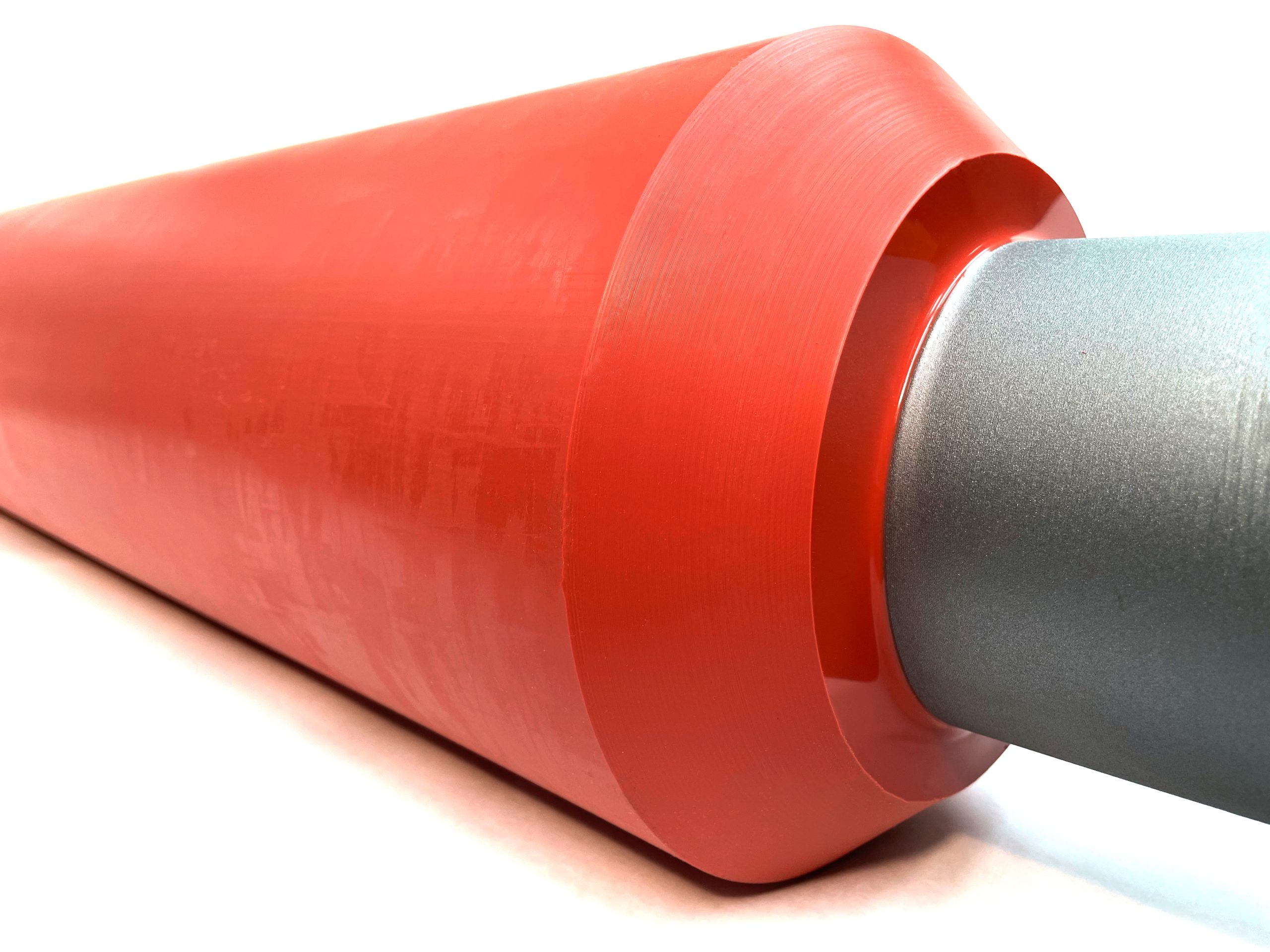
At ENRI, silicone is one of the key materials used for the manufacturing of industrial roller coverings and custom technical elastomer parts. With more than 35 years of experience in the processing of technical elastomers, we develop solutions tailored to the specific constraints of numerous industrial processes.
Thanks to their unique properties, silicones are well suited to demanding environments involving heat, thermal cycling, mechanical stresses or challenging chemical conditions.
Silicone fundamentals
What is silicone?
Unlike conventional rubbers, which are organic polymers, silicones belong to the polysiloxane family.
Their molecular structure consists of a chain of silicon and oxygen atoms (Si–O–Si). This specific structure is responsible for many of the physical and chemical properties of silicone.
The most commonly used silicone in industrial applications is polydimethylsiloxane (PDMS), valued for its flexibility, thermal stability and chemical resistance.
Origin and manufacturing of silicone
The raw material used to produce silicone is silicon, typically obtained from quartz (SiO₂).
After several chemical transformation steps, particularly the synthesis of methylchlorosilanes, these compounds are polymerized to form silicone chains. The resulting material is then cross linked to achieve its final mechanical properties. Depending on the formulation, this cross linking process can be activated through different chemical or thermal processes.
These steps make it possible to obtain different families of silicone elastomers suited to a wide range of industrial applications.
Physical and chemical properties of silicone
Silicone elastomers exhibit a range of properties that explain their widespread use across many industrial sectors.
Thermal resistance
Depending on the formulation, silicones can generally operate within a temperature range between approximately –60 °C and +200 °C. Some formulations may withstand higher temperatures for short periods.
Long term stability
Silicones generally offer good resistance to UV radiation, ozone and outdoor environmental conditions.
Surface properties
Silicone has low surface energy, which can provide useful non stick characteristics in certain industrial processes.
Chemical stability
Silicones generally demonstrate good chemical inertness toward many chemical agents, although compatibility must always be assessed according to the operating environment.
Elasticity
Silicone elastomers retain flexibility over a wide temperature range, making them suitable for many technical applications.
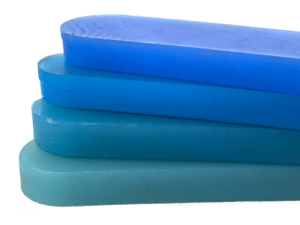
📌 Good to know
Silicone is one of the few elastomers capable of maintaining its mechanical properties across a very wide temperature range. This is one of the reasons why it is widely used in industrial processes involving heat or repeated thermal cycles.
Silicone in industrial applications
Due to their thermal and mechanical properties, silicones are used in a wide range of industrial applications.
They are commonly found in:
- Sealing systems
- Moulded technical parts
- Insulating components
- Technical sealants and adhesives
- Specialized industrial coatings
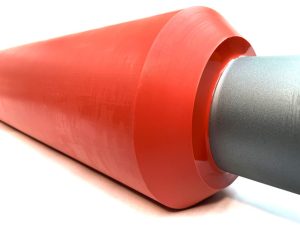
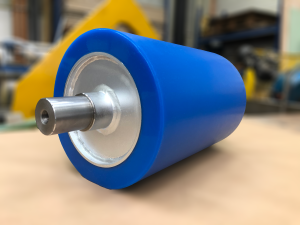
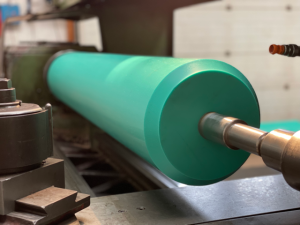
One particularly important application involves industrial roller coverings used in many processing and converting operations.
Why use silicone coatings for industrial rollers?
Silicone roller coverings are used in many sectors that require materials offering reliability and long term stability. This includes industries such as food processing, pharmaceuticals, energy and aerospace, as well as processing operations such as packaging, textile manufacturing, plastics processing and metallurgy, among others. Depending on the application, certain formulations may also meet requirements related to food contact.
In these production environments, rollers play a critical role in process stability and product quality. The choice of roller covering is therefore essential.
Silicone coverings are particularly valued for several characteristics:
- Good resistance to high temperatures
- Non stick properties useful in certain processes
- Long term dimensional stability
- Resistance to ageing
Depending on the application constraints, the properties of the covering can be adjusted in order to optimize:
- Material hardness
- Thermal resistance
- Mechanical behaviour
- Surface properties
These parameters allow the roller covering to be precisely adapted to the specific constraints of each production line.
Silicone solutions used by ENRI
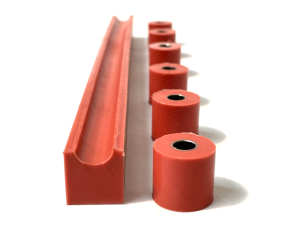
To meet the specific requirements of industrial applications, ENRI uses different silicone elastomer formulations for the covering and coating of industrial rollers.
Examples of technical silicones used
| Silicone | Main characteristics | Possible applications |
| RISIL PG | Versatile silicone | General industrial applications |
| RISIL PV | Good temperature | Heat related processes |
| RISIL PR | Good mechanical resistance | Demanding industrial applications |
| RISIL PW | Specific surface properties | Non stick applications |
| RISIL PH | High performance silicone | Severe industrial environments |
| RISIL PT | Specific technical formulation | Specialized applications |
| RISIL FAL | Silicone adapted to particular technical constraints | Specialized uses |
Technical silicone parts
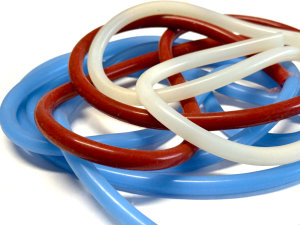
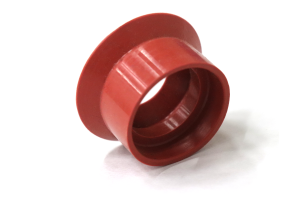
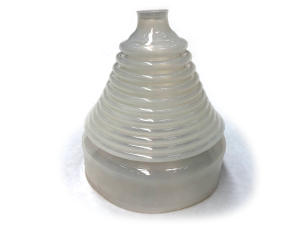
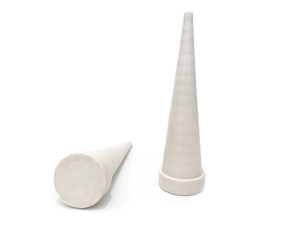
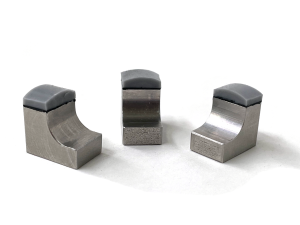
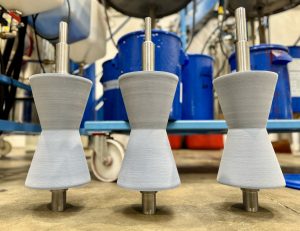
Beyond industrial roller coverings, silicone is also used to manufacture a wide range of custom elastomer technical parts.
At ENRI we manufacture in particular:
- Sealing Gaskets
- Membranes
- Profiles
- Sheets And Plates
- Suction Cups
- Bellows
- Moulded Technical Parts
These parts can be manufactured using several production processes such as:
- Moulding
- Injection
- Spraying
- Casting
Each project is studied in order to adapt the material to the specific constraints of the application.
📌 Good to know
Silicone properties can be adjusted through many parameters including formulation, hardness, type of cross linking and processing conditions.
ENRI expertise
For more than 35 years, ENRI has supported industrial companies in the design and manufacturing of roller coverings and elastomer technical parts.
Thanks to our experience in processing silicone elastomers and other technical elastomers, we develop solutions tailored to the specific constraints of many industrial processes.
In a constantly evolving industrial environment, materials such as silicone continue to play a key role. Their ability to meet increasing requirements in terms of performance, durability and reliability makes them highly relevant technical solutions for many industrial applications.
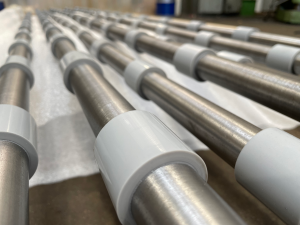
At ENRI, we continue to develop our expertise in silicone, particularly in the design of coverings for industrial rollers, idler rollers, wheels, drums and custom technical parts.
Do you have a project?
Are you working on a project involving silicone coverings for industrial rollers or the manufacturing of custom elastomer technical parts?
Our team is available to review your application and help you identify the most suitable solution for your industrial requirements.
Need a technical solution?
Trust ENRI for your industrial coatings and molded technical parts.
Contact our experts →