Article published in 2024 – updated April 2026
Introduction
In many industrial processes, elastomer parts are not always visible, but they play a critical role in process stability.
A poorly selected seal, a membrane that degrades too quickly, or a part that cannot handle mechanical stress can quickly lead to process drift or even production downtime.
Choosing the right elastomer is not about comparing datasheets. It’s about understanding how the part will actually behave in production.
Whether it’s seals, membranes, suction cups, bellows, sleeves, or custom molded components, the material directly impacts performance, service life, and reliability in operation.
Why Material Selection Matters
Choosing an elastomer is never about a single property. In practice, most material selection mistakes come from oversimplifying the problem.
A material is chosen for its temperature resistance, but abrasion is overlooked. Mechanical strength is prioritized, but the part operates in a chemical environment. The result: the part does not last and process instability follows.
In reality, most components are exposed to multiple constraints at once: thermal cycling, mechanical stress, abrasion, chemical exposure, and repeated deformation.
It’s this combination that should drive material selection.
A well-chosen material helps extend part life, stabilize the process, reduce downtime, and control maintenance costs.
Good to Know
In practice, elastomer selection is always based on a combination of factors: temperature, abrasion, chemical compatibility, elasticity, and mechanical stress.
At ENRI, this analysis starts with the specifications- and is always validated against real operating conditions.
Silicone, Polyurethane, or Rubber: How to Decide
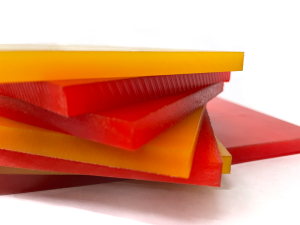
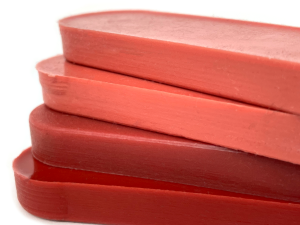
The three main elastomer families used for molded technical parts are silicone, polyurethane, and industrial rubbers.
But in practice, the goal is not to find the “best material”, it’s to balance constraints.
Silicone offers excellent thermal stability and long-term consistency, especially in applications involving heat or temperature fluctuations. But it is more sensitive to abrasion and high mechanical loads.
Polyurethane delivers high mechanical strength and excellent wear resistance. It performs well under friction and heavy loads, but becomes more limited when temperature becomes the dominant constraint.
Rubber, depending on the formulation, can provide elasticity, sealing performance, and shock absorption. But its performance varies significantly depending on the compound used.
The right choice is always a compromise – not the pursuit of a single “best” property.
Detailed Comparison of Industrial Elastomers
To go further, elastomers need to be compared across several key criteria: temperature, mechanical strength, abrasion resistance, aging behavior, chemical compatibility, and in-service performance.
The table below is designed as a decision-support tool:
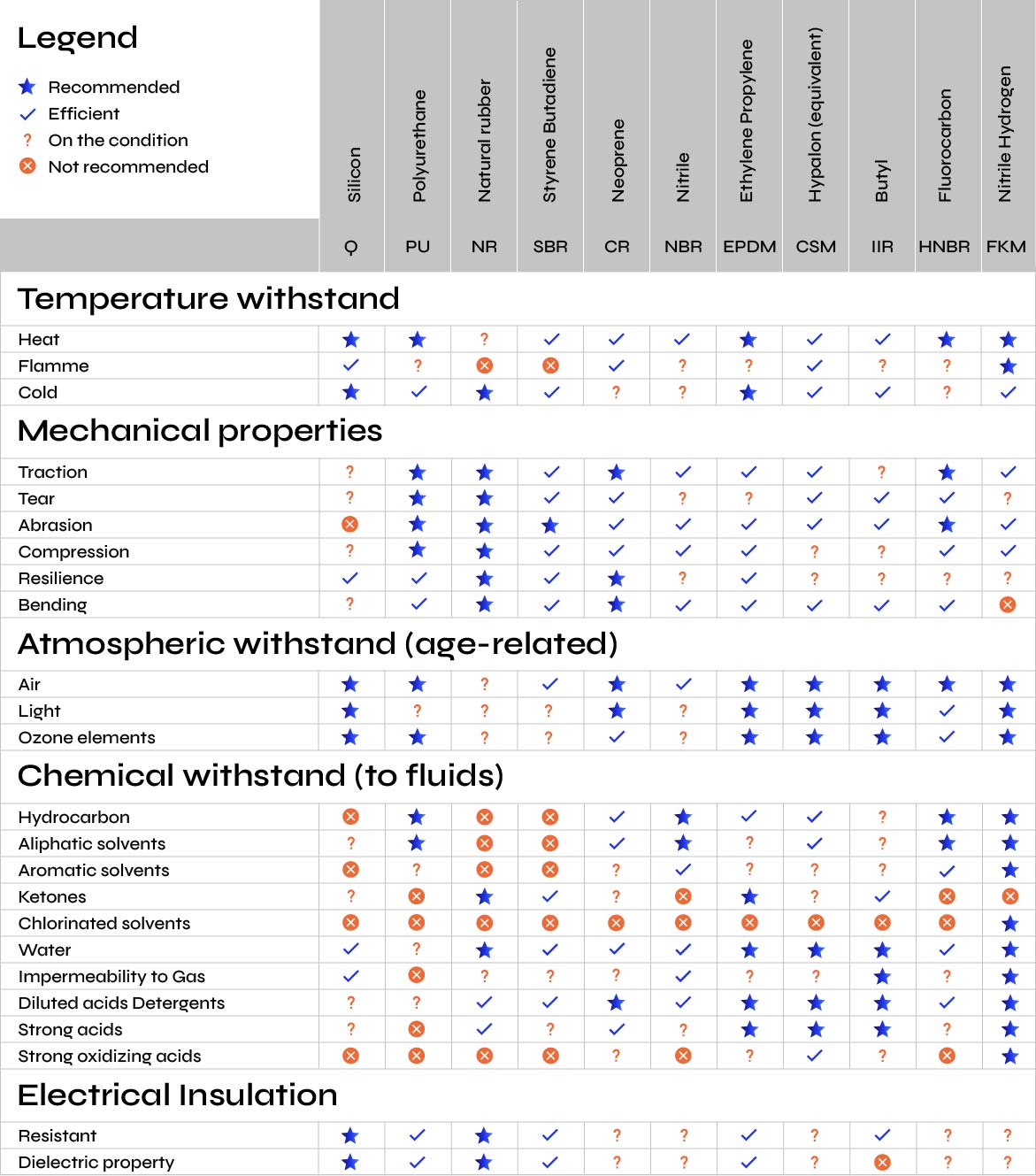
It provides a solid starting point. Final selection always depends on real operating conditions and process-specific constraints.
For a full version of the table: https://www.enri.fr/technologie/selection-de-garnissage-de-rouleaux/
Examples of Elastomer Technical Parts
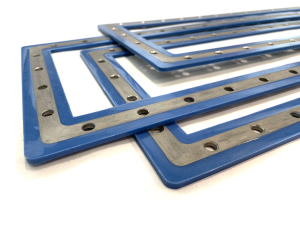
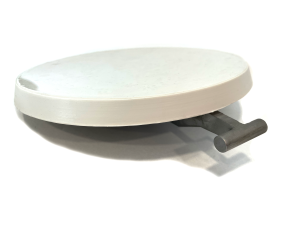
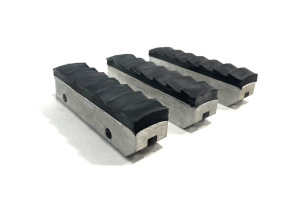
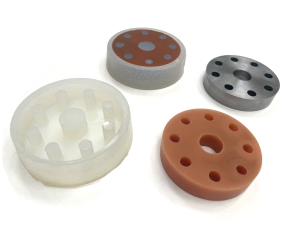
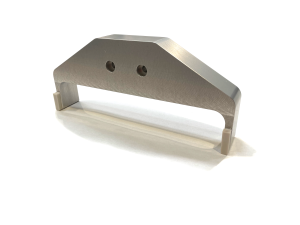
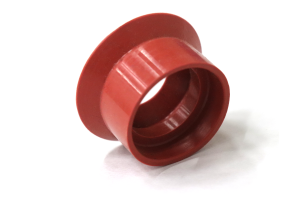
In practice, elastomer selection applies to a wide range of custom technical parts.
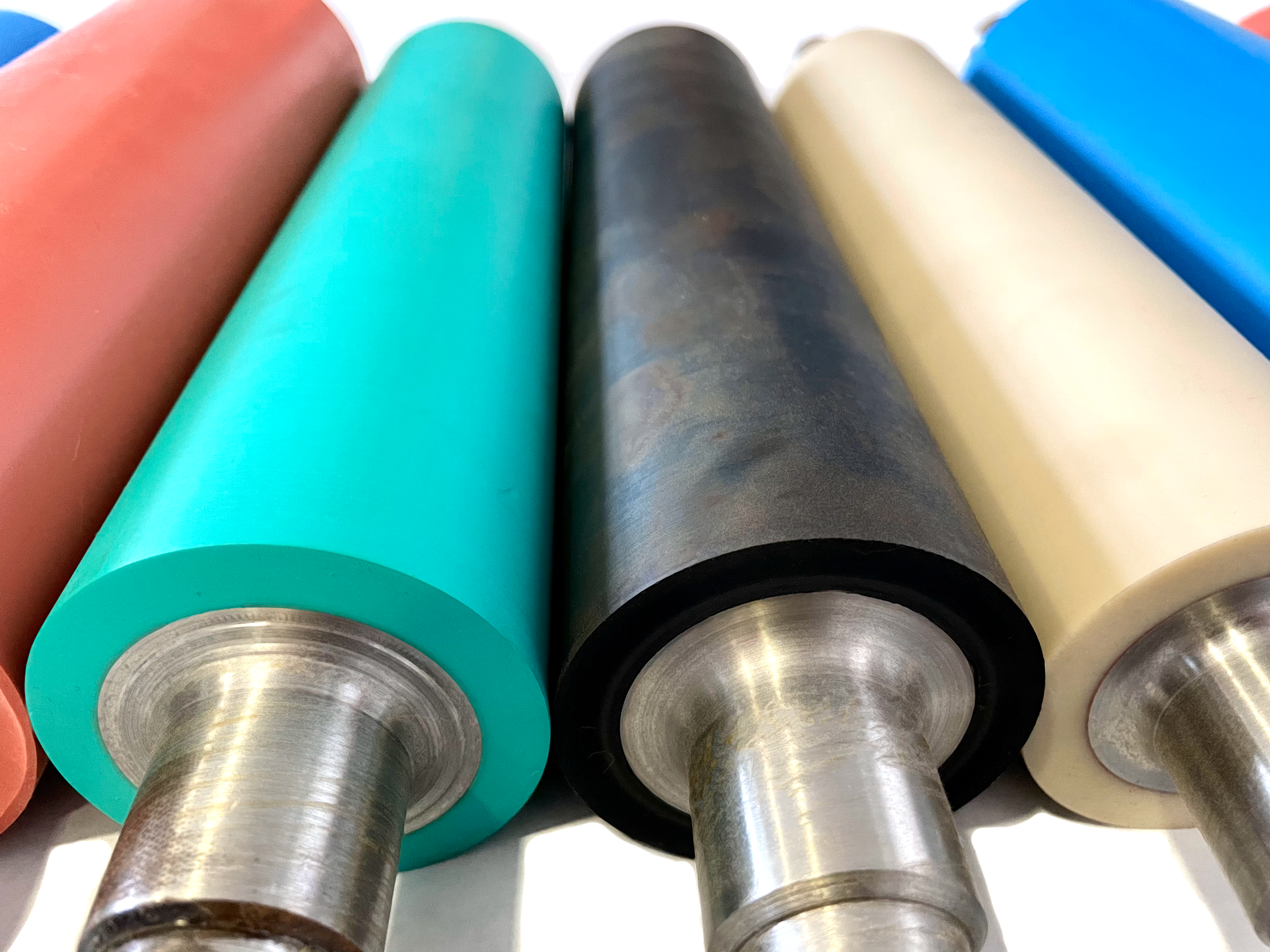
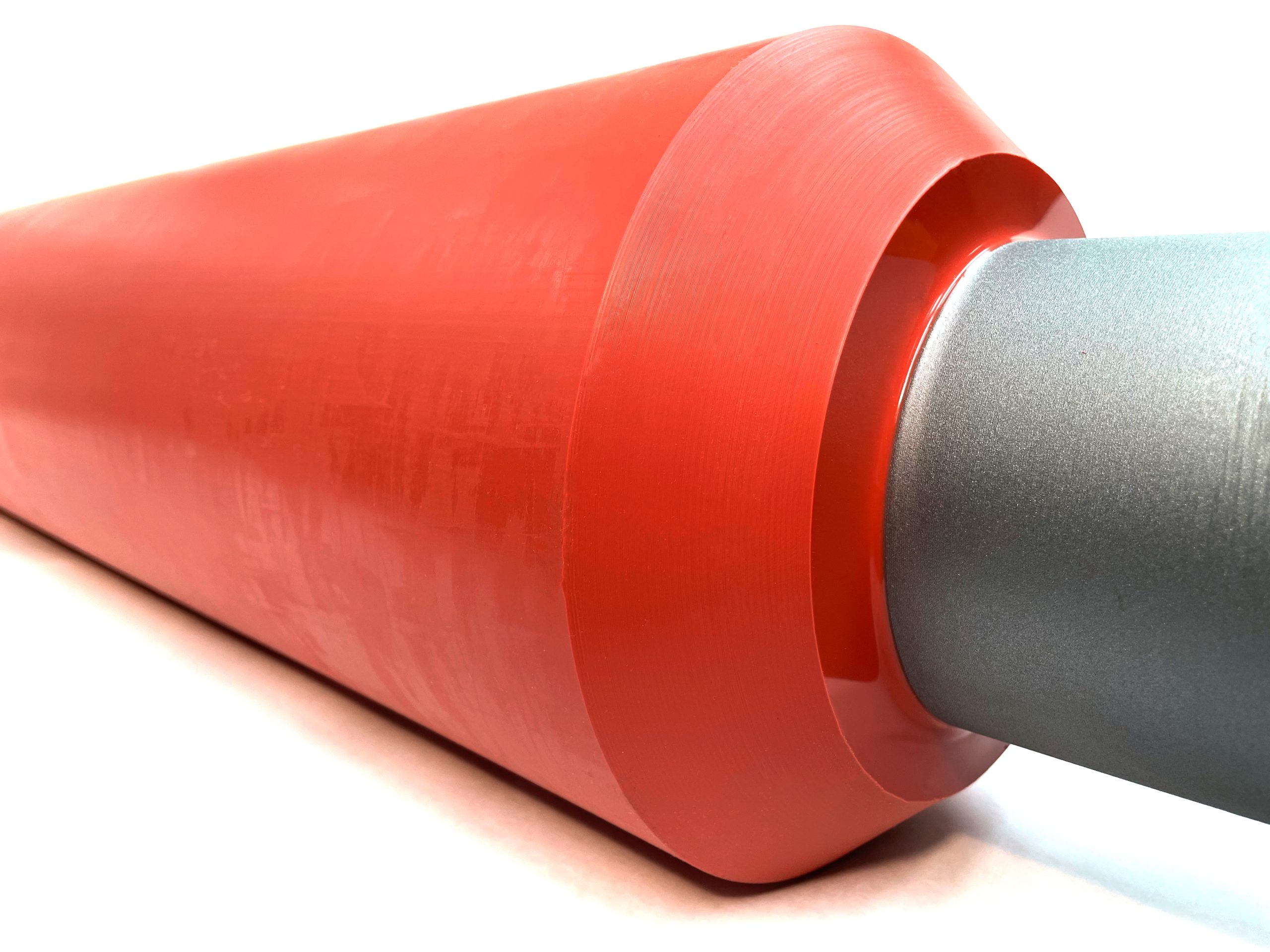
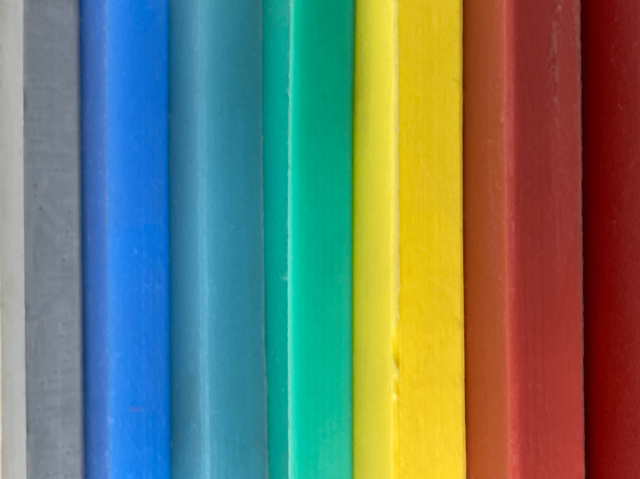
At ENRI, this includes profiles, tubes, discs, plates, sheets, belts, seals, sleeves, bellows, membranes, suction cups, molded parts, prototypes, no-crush wheels, pads, drive rollers, clamping components, and other parts developed from specific requirements.
This diversity reflects a simple reality: material selection is not driven by the shape of the part, but by the conditions it needs to withstand.
Choosing Based on the Application
There is no universally “best elastomer.”
A material that works well in one application can quickly become a weak point in another. Everything depends on how constraints interact.
For parts exposed to heavy mechanical loads or wear → polyurethane is often the right starting point.
For sealing or flexibility functions → certain rubber compounds may be more appropriate.
For applications exposed to heat, UV, or demanding environments → silicone is often the better choice.
The key is not a single property, but the material’s ability to handle all process conditions.
Application Areas
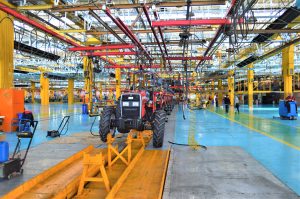
Elastomer technical parts are used across a wide range of industries, wherever processes involve mechanical, thermal, or chemical constraints.
They are commonly found in sectors such as food processing, pharmaceuticals, plastics, packaging, energy, and metallurgy, as well as in material processing, industrial maintenance, and more specialized equipment.
In practice, the industry itself is rarely the deciding factor. What matters is the process and the real conditions the part will face.
ENRI Expertise
For over 35 years, ENRI has supported industrial companies in the design and manufacturing of elastomer technical parts, as well as industrial roller coverings.
Material selection is only part of the equation. Performance also depends on how the part is made.
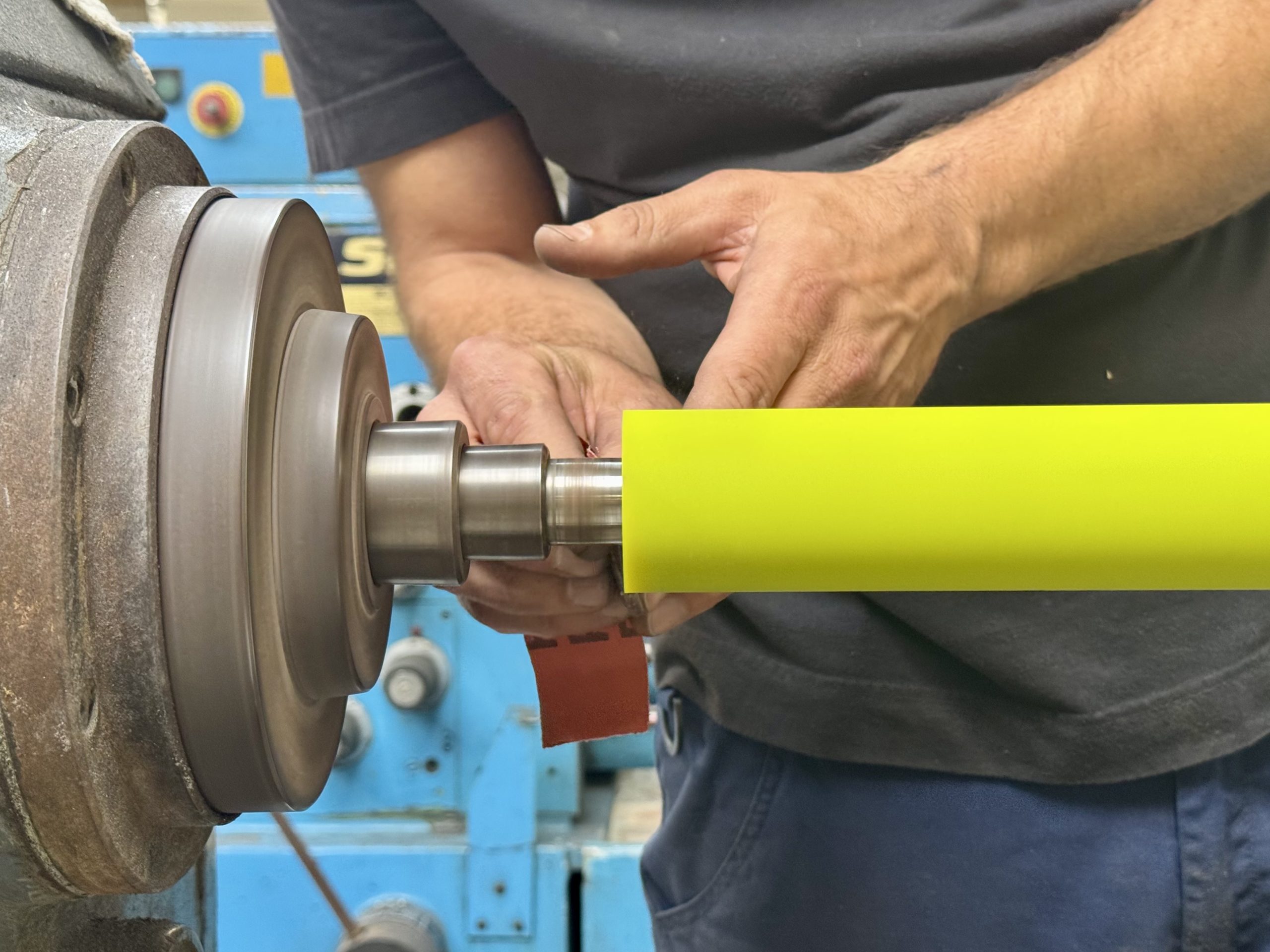
Our teams are involved at every stage – from understanding specifications to selecting materials and manufacturing the final part, with capabilities in molding, machining, surface treatment, and grinding.
This approach ensures solutions that match real industrial constraints, with a clear objective: reliability and long-term performance.
Do You Have a Project?
Looking for the right material for your molded elastomer parts?
Our team can support you in analyzing your application and guiding you toward the most suitable solution.
Get in touch to discuss your project.
Need a technical solution?
Trust ENRI for your industrial coatings and molded technical parts.
Contact our experts →