Published on July 9, 2025 – Updated in May 2026
Industrial Polyurethane: Properties, Applications and Material Selection According to Process Constraints
Polyurethane is one of the most widely used elastomers for industrial roller coverings and technical elastomer parts manufacturing. Its abrasion resistance, mechanical performance and wide hardness range make it a relevant material for mechanically demanding environments, provided that the right compound is selected according to the actual process constraints.
At ENRI, we have specialized in polyurethane processing for more than 35 years, both for custom industrial roller coating and molded technical parts. This guide presents the material’s properties, its limitations, and the applications in which it provides a suitable response to process constraints.
What is polyurethane?
Polyurethane is a polymer obtained through the reaction between a diisocyanate and a polyol compound. Depending on the formulation, it can take several forms including rigid foams, flexible foams, elastomers, coatings, adhesives and many others.
Manufacturing process
| Step | Description | Our expertise |
| 1. Mixing | Combination of diisocyanates and polyols | Precise adjustment of mechanical properties |
| 2. Prepolymer | Beginning of the exothermic reaction | Optimized density control |
| 3. Molding | Shaping process (gravity casting, injection, bonding) | Custom technical parts manufacturing |
| 4. Finishing | Drying, cutting or assembly | High-performance industrial coverings |
Why use polyurethane for an industrial roller?
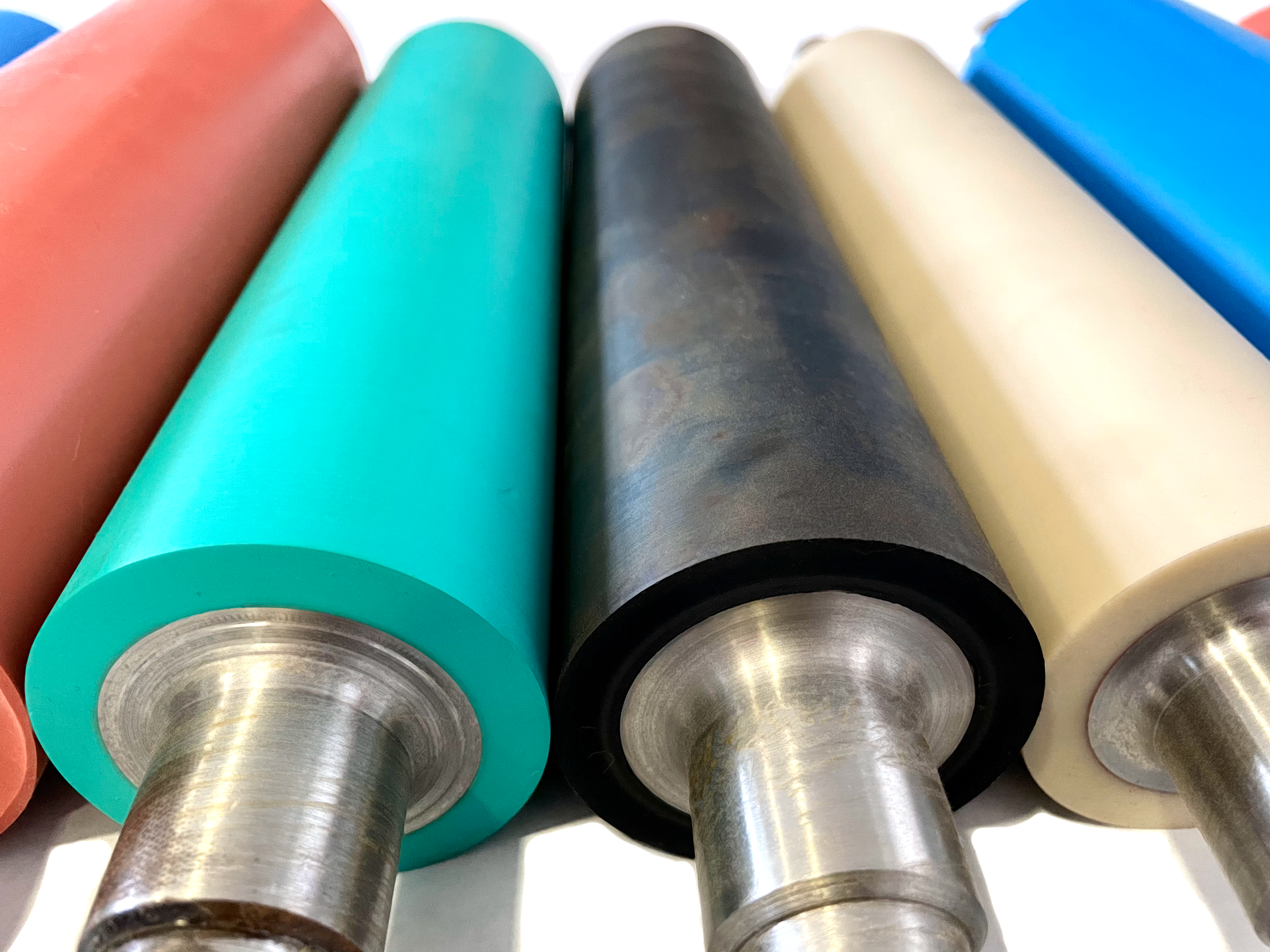
Polyurethane stands out for its abrasion and impact resistance, generally superior to many standard rubber compounds. Its ability to absorb vibrations, its low deformation under load and its excellent adhesion to metallic inserts make it particularly suitable for rollers exposed to high rotational speeds, repetitive loads or abrasive environments.
It is available in a wide hardness range, from Shore A 30 to Shore D, allowing the roller behavior to be adapted to the specific constraints of each application: contact pressure, operating speed, processed material or operating environment.
Depending on the selected formulation, polyurethane also has thermal limitations that must be evaluated according to the actual operating conditions. Chemical compatibility also depends on the fluids involved: certain solvents, oils or chemical agents may degrade the material depending on the compound used. In environments exposed to high thermal constraints, silicone may be more appropriate.
Polyurethane is therefore not a default choice. It is a deliberate material selection when mechanical resistance, wear resistance and durability take priority over thermal or chemical resistance.
Our latest polyurethane projects
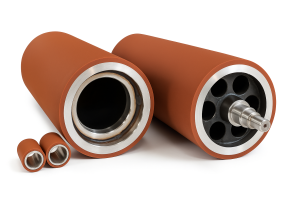
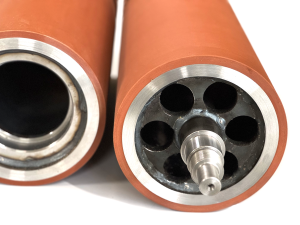
1.Rollers and guide rollers for special machines
Industry: Custom industrial machine design
Characteristics: Custom shapes and dimensions, high load and wear resistance
Benefits: Improved durability and reliable performance under intensive operating conditions
2. Bio-based rollers for the electronics industry
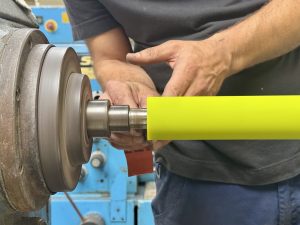
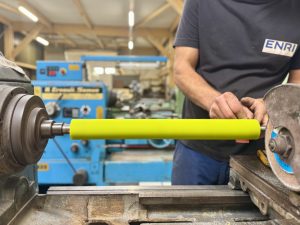
Industry :Electronics and various industrial sectors
Characteristics : Polyuréthane partiellement biosourcé, haute précision, compatibilité chimique
Bénéfices : Partially bio-based polyurethane, high precision, chemical compatibility
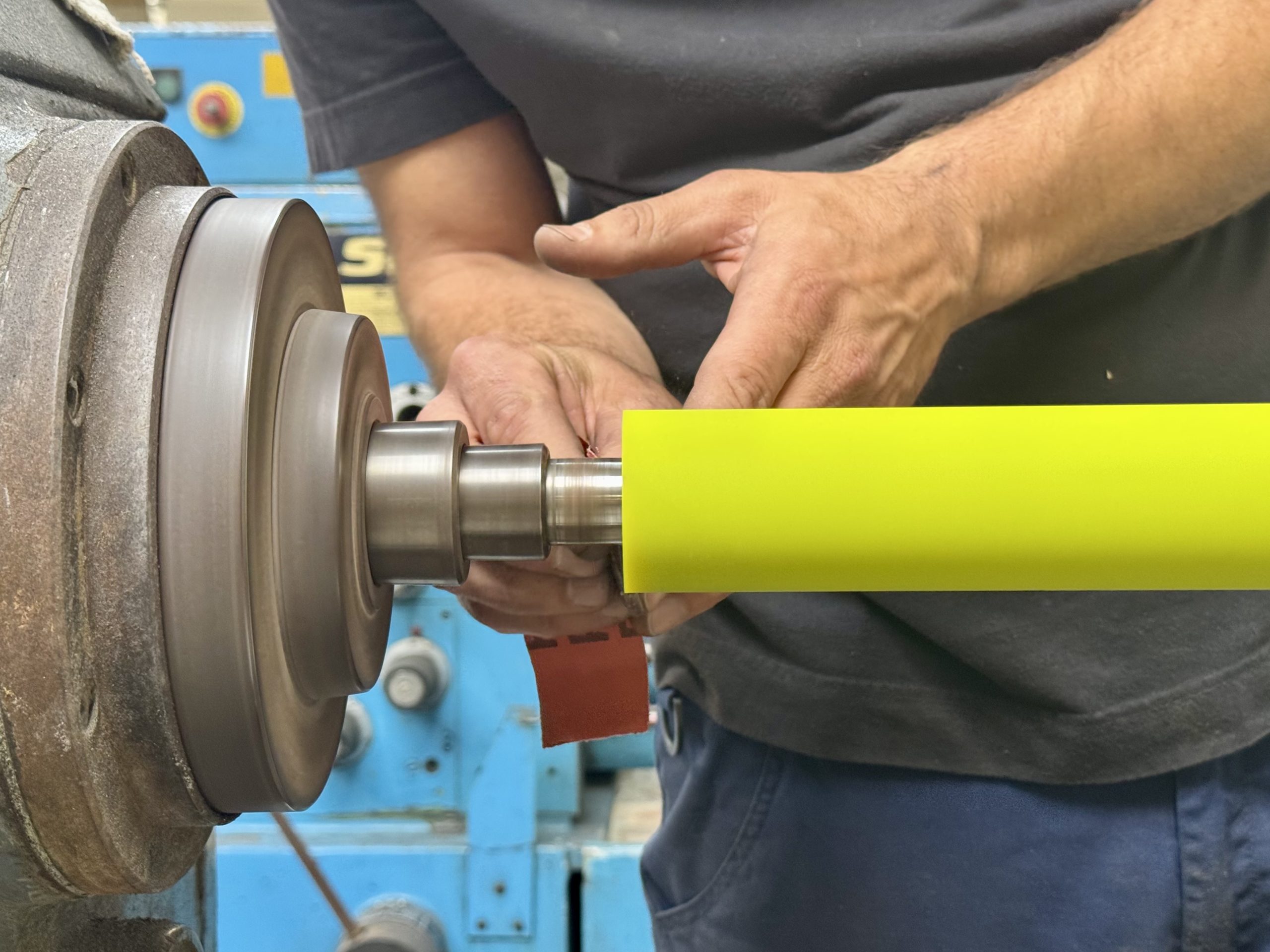
The grinding of these rollers is carried out to ±0.05 mm thanks to our workshop capabilities, strengthened since 2025 through the integration of SACD, specialist in industrial roller covering and precision grinding. Learn more about our precision grinding capabilities.
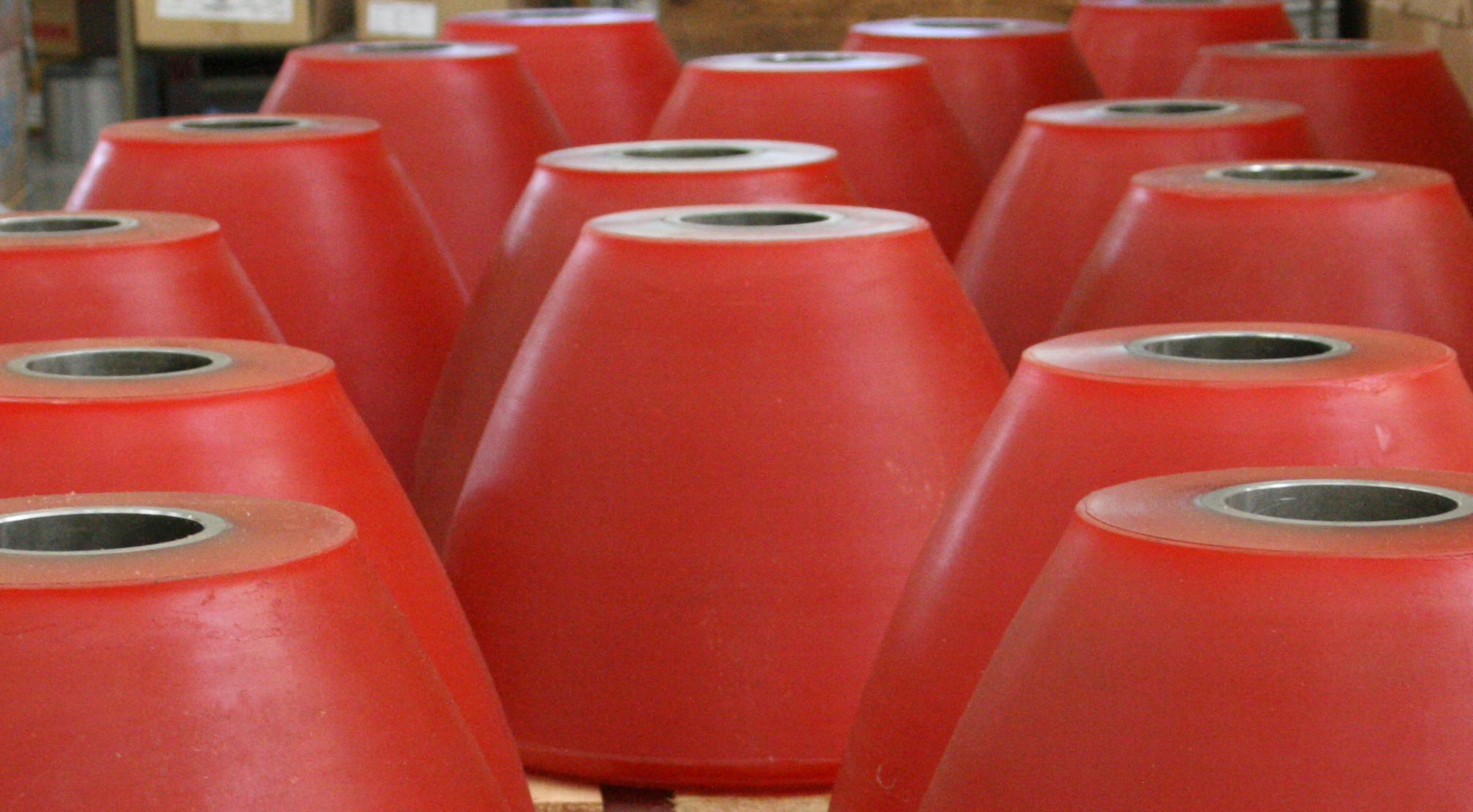
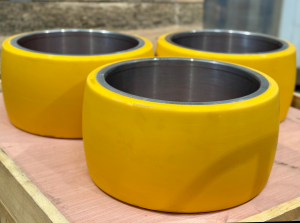
3.Wheels for the oil & gas and water industries
Industry: Energy, petrochemical and water treatment sectors
Characteristics : Resistance to hydrocarbons, humidity and heavy mechanical constraints
Benefits : Improved durability in environments exposed to hydrocarbons, humidity and high mechanical loads
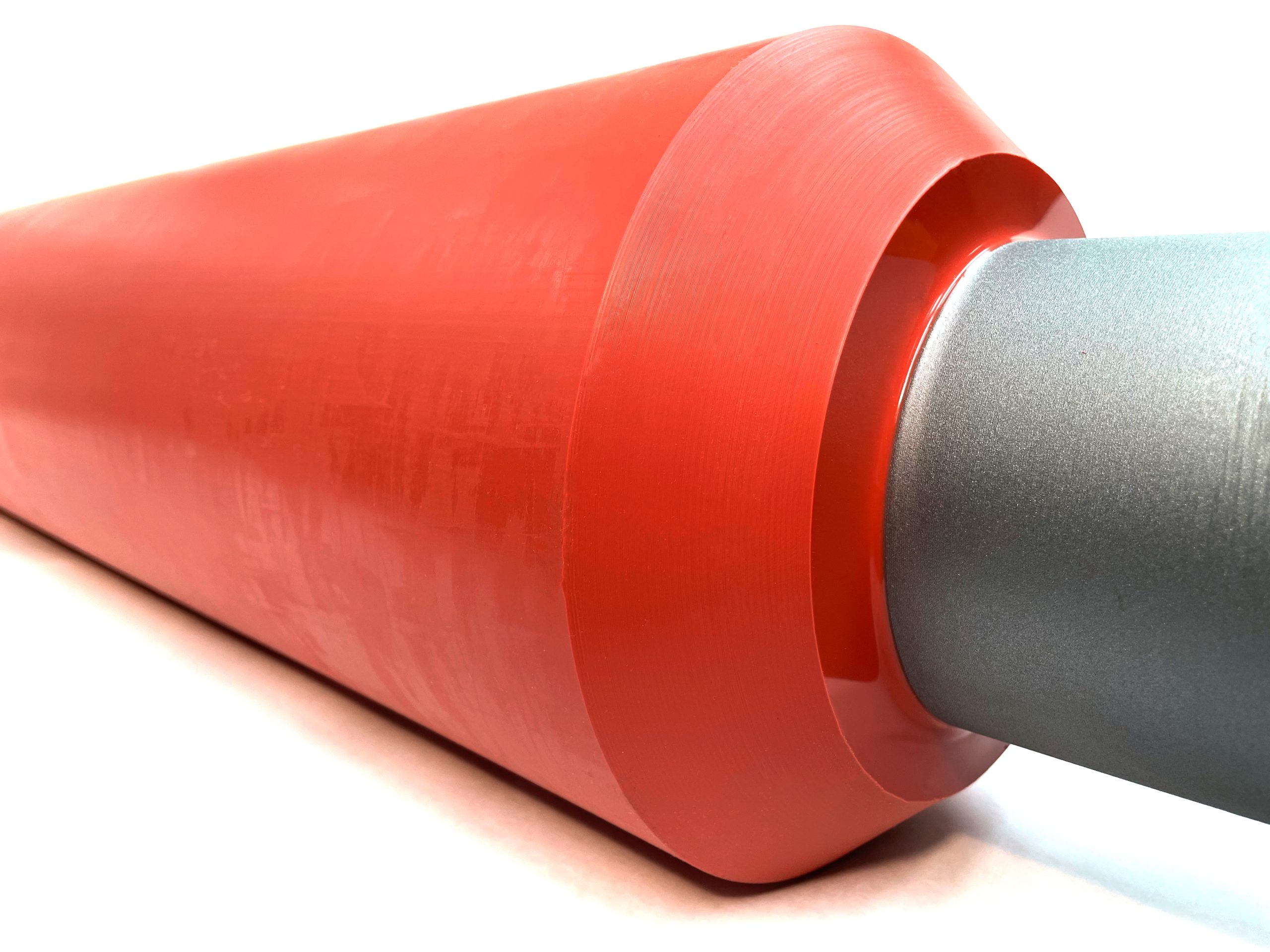
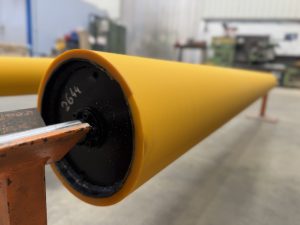
4. Conical rollers for the metallurgy industry
Industry: Metallurgy
Characteristics : Custom conical shapes, high abrasion resistance
Benefits : Optimized guiding and increased endurance on production lines
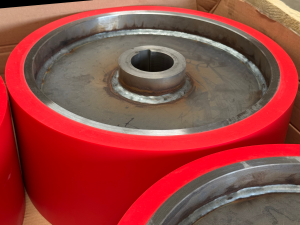
5.Wheels for the energy sector
Industry: Wind power, hydraulic, thermal and oil & gas sectors
Characteristics: Resistance to heavy loads, impacts and outdoor environments
Benefits: Reliability and long service life, even in demanding operating conditions
The ENRI approach
Selecting a polyurethane covering is not simply about choosing a material. It requires analyzing the actual process constraints: load, speed, temperature, chemical environment, required dimensional precision and expected service life. This analysis makes it possible to identify the appropriate formulation and prevent operational drift that may sometimes appear several weeks after commissioning.
Each application involves specific constraints. To learn more about selecting polyurethane, silicone or rubber according to your process conditions, consult our elastomer selection guide. To discuss a specific application with our team, contact us.
Frequently Asked Questions
Is polyurethane suitable for food industry applications?
Polyurethane can be used in certain food industry applications depending on the selected formulation and actual operating conditions. For applications involving direct food contact or high thermal constraints, silicone is often more appropriate. ENRI analyzes each application according to its mechanical, thermal and regulatory constraints before making any recommendation.
Up to what temperature can polyurethane operate?
Depending on the selected formulation, polyurethane can be used in moderate to elevated temperature environments. Thermal limitations depend in particular on exposure time, mechanical loads and actual operating conditions. In applications subjected to high thermal constraints, silicone may be more appropriate.
Which Shore hardness should be selected for a polyurethane roller?
ENRI works with hardness ranges from Shore A 30 to Shore D depending on the application. Hardness directly influences deformation under load, contact behavior and wear resistance. It should never be selected independently but according to all process parameters.
Is polyurethane resistant to oils and solvents?
The chemical resistance of polyurethane strongly depends on the formulation. Some formulations provide good resistance to mineral oils, while others are sensitive to certain solvents or chemical agents. Compatibility must be validated according to the exact nature of the fluids involved, their concentration and their operating temperature.
Can an existing roller be re-covered with polyurethane?
Yes, in most cases. When the metallic insert remains in good condition, the roller can be stripped, re-covered with polyurethane and precision-ground to ±0.05 mm. This solution often extends the roller service life while adapting the covering to new process constraints.
How does ENRI determine the right polyurethane formulation for an application?
The analysis is based on actual process constraints: load, speed, temperature, chemical environment, required dimensional precision, expected surface finish and targeted service life. These parameters help determine the most suitable formulation, hardness and manufacturing process.
Optimize your industrial performance
Discover how our solutions can improve the efficiency of your equipment.
Contact our experts →